

In many communities, the distance between people isn’t because they lack stories. It’s because they lack an opportunity to share them comfortably. For young people, talking with older adults can feel unfamiliar. For older adults, being listened to by young people can bring a long-forgotten sense of warmth. When a single question opens a conversation, and when listening makes room for emotion, people across generations can move from “unfamiliar” to “willing to understand.” In recent years, VolTra has run several community projects that combine conversation, games, sensory experiences, and storytelling, so participants learn through action and the community grows through connection.
A Community’s Distance Can Be Closed One Question at a Time
Sometimes community cohesion doesn’t begin with a large-scale program. It begins with one sincere question. When young people and older adults sit down at the same table, the unfamiliar gap between their ages gradually softens through sharing. Some talk about their youth, some share the pressures they face today, and some discover, simply by listening, that the generations aren’t so far apart after all. VolTra has always believed that real community action isn’t just about completing a service project. It’s about helping people understand each other again and inspiring them to go one step further for the people around them.
VolTra is committed to the vision of “Everyone Takes Part in Glocal Action.” Behind this vision is more than encouraging people to volunteer. We hope that everyone can see their relationship with their community anew, right where they live their daily lives. Real community cohesion begins with mutual understanding. Real youth development isn’t only about learning to organize events or complete tasks. It’s about learning to set aside assumptions, stay curious, and listen when facing different life experiences.
On the issue of intergenerational inclusion, there is often an invisible distance between young people and older adults. This distance doesn’t necessarily come from conflict. More often, it comes from a lack of opportunities to meet. Young people may not know what social changes older adults have lived through, and older adults may not understand the pace of life and emotional pressures young people face today. Without enough chances to talk, both sides can easily remain stuck in their existing impressions of each other.
That is why VolTra, through the “Community Cross-Sector Innovation Trainee” project in partnership with One Bite Social, has been developing the “VolTra Cross-Generational Dialogue Cards” as a pilot. These cards are not simply a game. They are a medium for connection. Starting with warm, thoughtful questions, they help people of different backgrounds and ages interact more naturally and get to know each other through everyday life, emotions, memories, and values.
Starting in November 2025: A Community Practice That Opens Up Emotions Through Scent
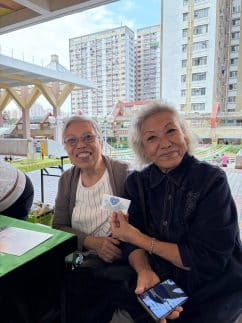
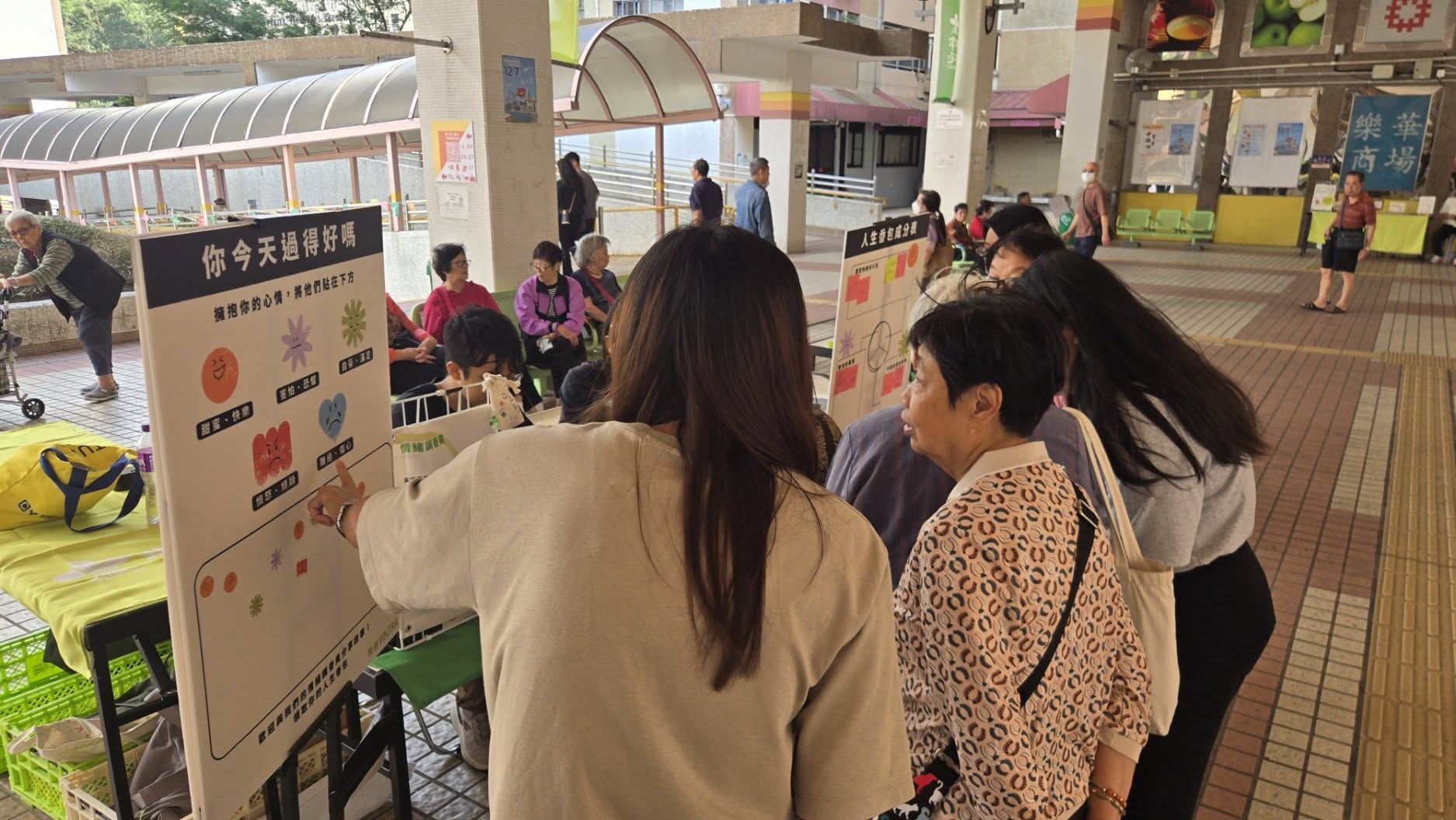
As early as November 2025, through One Bite Social’s “Community Cross-Sector Innovation Trainee” program, VolTra took part in the Very Community Festival in Kwun Tong District, organized by Very Hong Kong’s Very Community Space+. At Lok Wah Estate, we served as “Emotion Perfumers.” The goal was to use scent as a way into emotional expression, so that young people, older adults, and neighbors could share their more delicate feelings in a relaxed atmosphere.
The activity combined sensory experiences, emotional conversations, and hands-on crafting. After two warm workshops, young people and older adults came together at the festival for a sensory-based conversation about emotions. Everyone shared around three themes: “things that make me happy,” “things that scare me,” and “things I’m proud of.” These seemingly simple prompts reflect how each person approaches life, and they helped people of different ages find common ground in their emotional experiences.
At the end of the event, VolTra and visiting neighbors and young people made their own “Peace-of-Mind Sachets,” blending scent with emotion and carrying calm and good wishes back into daily life. This design turned emotion from a purely private feeling into a language the community could understand together. People often aren’t used to talking directly about fear, stress, or pride, but when sharing begins with a scent, expression becomes gentle and natural. Young people learned to listen to emotional experiences from different stages of life, and older adults, through crafting and sharing, were able to place their own stories in a position of respect.
The value of this event went beyond completing a festival appearance. It showed our team an important direction: intergenerational exchange doesn’t have to begin with serious topics. It can open gradually through a scent, a memory, or a simple question. Lok Wah Estate was more than a venue. It was a community setting full of lived memories. When residents share their feelings in a familiar place, the community stops being merely a place to live and becomes a network of mutual support.
Putting Curiosity Into Cards, So Intergenerational Communication Can Be Practiced
After the November 2025 community event, VolTra carried what we had observed and learned into the design of the “VolTra Cross-Generational Dialogue Cards.” The cards respond to a very practical community need: how to make it easier for people of different generations to start a conversation. Often, young people and older adults aren’t unwilling to talk. They simply don’t know how to say the first sentence. Without shared topics, silence is easily mistaken for distance, and without suitable guidance, sharing can stay on the surface.
The goal of the VolTra Intergenerational Dialogue Cards is to use simple, guided questions to lower the psychological barrier to conversation between young people and older adults, so both sides can share life experiences in a safe, relaxed, and respectful atmosphere. The project centers on card design, interactive testing, and community application, so participants are not passive recipients of a ready-made tool but active contributors in shaping a better way to connect. Through this process, young people learn how to design a communication tool that truly fits people’s needs, and how to consider older adults’ feelings, pace, and ways of expressing themselves in service design.
This learning goes beyond creative brainstorming. It involves empathy, observation, and the ability to respond to community needs. Once the cards are placed in real community settings, they are no longer just paper on a table. They become a bridge between people. The project shows young people that innovation doesn’t have to be grand. It can begin with one sincere question. Its impact lies in making intergenerational communication something that can be practiced and sustained, and in moving community engagement from “running activities” toward “building relationships.”
The value of these cards lies in the fact that they don’t treat older adults as a single, uniform group, nor do they place young people in a one-way role of service provider. Instead, they invite both sides into the conversation as equals. Older adults can share their life wisdom, and young people can share their own confusion and ideas. When everyone has room to express themselves, community connection is no longer one-sided giving. It becomes a way of truly seeing one another.
Before the Official Launch: Refining Our Direction Through Playtesting and Feedback
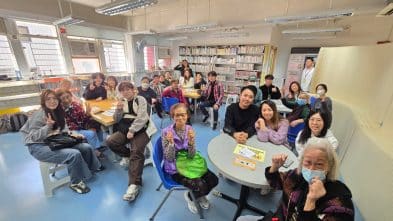
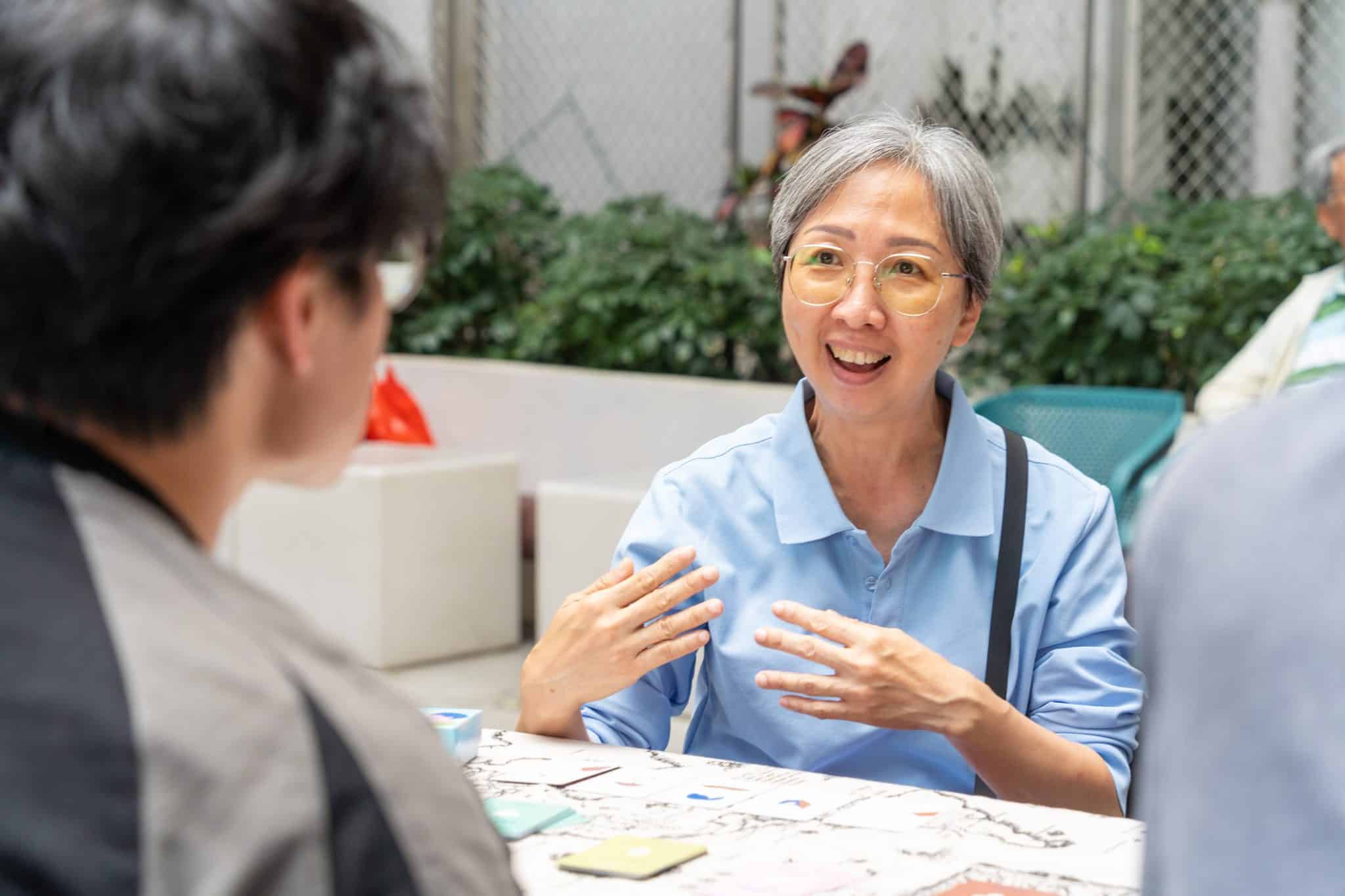
Before using the cards at our public event in April, VolTra partnered with Caritas Ngau Tau Kok Community Centre to hold a playtest of the “VolTra Intergenerational Dialogue Cards,” inviting VolTra members and older adults to try out the prototype together. The goal was to let the design team observe how the cards were used in real interactions, and to learn which questions easily opened up conversation and which parts of the flow needed adjustment. The focus at this stage wasn’t just whether the cards were fun, but whether they could truly foster understanding between young people and older adults.
The session was run in a game-like format, with young people and older adults gradually sharing their life experiences, thoughts, and feelings around the questions on the cards. At first, some participants may have needed time to settle in, but as the questions unfolded, their responses became more natural. As the team observed the interactions, we also gathered participant feedback to further refine the card content and the flow of the activity. Testing the tool in a real community setting meant the design didn’t stay at the level of ideas. It responded directly to what users needed.
Participants clearly enjoyed the time they spent talking with one another. One older participant said, “I’m so happy to see so many young people willing to sit down and chat with us.” These simple, heartfelt words remind us that in community work, companionship and listening are powerful in themselves. For older adults, young people sitting down with them was more than a step in an activity. It made them feel valued. That experience of being seen is an important foundation for building community connection.
The activity also gave young people a fresh understanding of older adults’ life experiences. One young participant said, “I didn’t realize how much the elders know and have been through. Hearing them share was really inspiring.” This response shows how intergenerational exchange can break down young people’s preconceived ideas about older adults. When young people truly hear older adults’ stories, they discover that older adults are not just people who need care. They are people with rich life experience, emotional memories, and practical wisdom. This shift is an important step in young people’s growth.
The value of this stage went beyond completing a prototype test. It allowed young people and older adults to take part together in a community co-creation process. Every response, every laugh, and every moment spent pausing to listen became valuable input for improving the design. It taught young people that good community projects aren’t pushed out in one direction but must be continually refined within real relationships. It also showed older adults that their opinions and experiences can directly shape how a project takes form.
April 2026: Bringing the Dialogue Cards to the Story Platform of VolTra’s 17th Anniversary
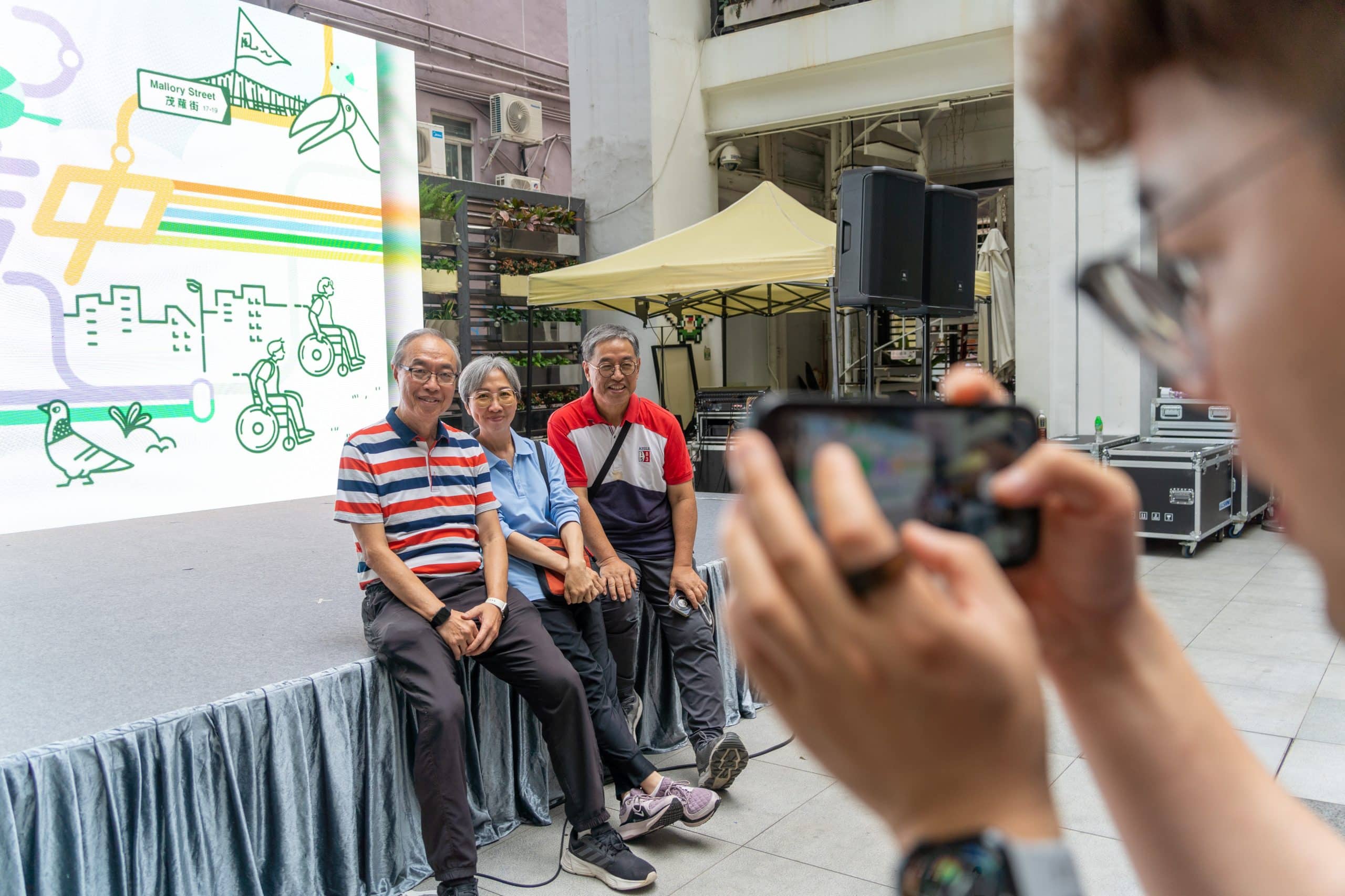
In April 2026, the “VolTra Cross-Generational Dialogue Cards” went on to feature in “VolTra’s 17th Anniversary Special Project: VolTra Mode – Connecting.” VolTra transformed M7 on Mallory Street in Wan Chai into an interchange platform linking the local and the global, offering exploration missions, film screenings, murder mystery games, and live talks that invited participants to rediscover what local and global communities mean. This “VolTra Mode” platform wasn’t only a celebration of seventeen years of the organization. It was an invitation for everyone to think about how they can become part of the action.
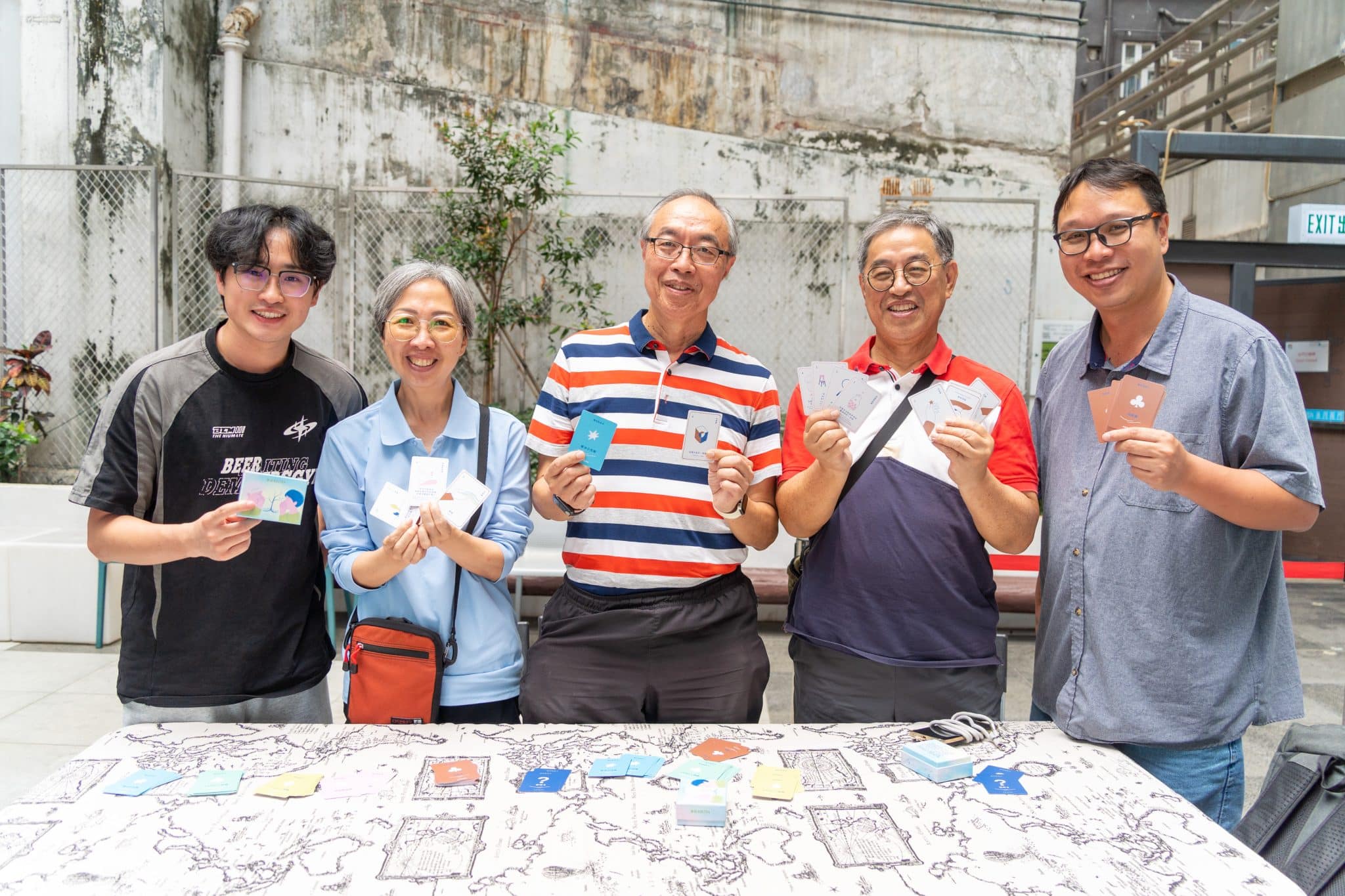
In the “Story Stall” segment, participants used the VolTra Intergenerational Dialogue Cards to get to know a lively group of VolTra volunteers and seniors with rich volunteering and life experience. The goal of this segment was for people of different generations to talk about a range of topics together and to share community stories and life wisdom from around the world. Unlike a typical exhibition, the Story Stall didn’t display experiences on a wall. It let stories be heard through real conversation. In face-to-face interactions, participants discovered that everyone has a one-of-a-kind story and life experience worth treasuring.
This segment also took the dialogue cards from prototype testing into a more open community setting. Placed at the 17th anniversary event, the cards carried more than a prompting function. They became a way to connect different life journeys. What veteran VolTra volunteers and seniors shared wasn’t only their past experiences, but how they see the world, how they understand community, and how they have stayed active across different stages of life. In listening, young people gained not just stories but also an attitude for engaging with society.
For young people, this was a chance to understand the diversity of life, as well as practice in listening with humility. For veteran volunteers and seniors, it was a space to turn experience into inspiration, so their past journeys could continue to influence the next generation. The impact of the segment lies in making intergenerational connection more than just “exchange,” allowing stories, wisdom, and a spirit of action to be carried forward.
Conclusion: When We Are Willing to Listen, Communities Begin to Change
A dialogue card, a scented sachet, a story stall: these may look like small details in an event, but behind them lies VolTra’s deeper vision for community action. Communities need more than more events. They need more opportunities for people to understand one another. Youth development isn’t just about logging service hours. It is about building values, a sense of responsibility, and the capacity for action through real encounters. When young people are willing to listen to older adults, and older adults are willing to share their life experiences, the distance between generations can be closed once more. A community that can hold more stories, more emotions, and more moments of mutual recognition becomes more inclusive and more resilient. VolTra believes that real change often begins with one sincere conversation and is carried forward by people willing to act. Every encounter can become the starting point for the next community change.
Join VolTra in Continuing More Warm, Heartfelt Community Action
VolTra will continue to encourage more people to take part in global and local action through local projects, youth training, intergenerational exchange, and community co-creation. Every project is more than a single event. It is an opportunity for young people to learn, for communities to connect, and for different life stories to be seen. When more people are willing to participate, support, and walk alongside us, these actions, born of curiosity, empathy, and a desire for change, can continue in more communities. Together, let’s create more spaces in Hong Kong where people can talk, understand one another, and grow together.
About Glocal Leader Academy
The Glocal Leader Academy is funded by the Hong Kong Jockey Club Charities Trust and organized by VolTra. Its aim is to train the next generation of changemakers through training programs, interactive tasks, workshops, local and overseas volunteer service, and other projects. Based on VolTra’s “3E’s and 2A’s” belief (Exploration, Empathy, Empowerment of Change; Local Awareness and Global Awareness), the program encourages young people to explore the world and build a better society through community action.
For past projects in the Glocal Leader Academy, please visit https://bit.ly/cpg-glocal-leader-academy.
Make a Real Impact with VolTra!
If you care about youth development, community restoration, and sustainability, we’d love you to explore VolTra’s local projects in Hong Kong. Through partnerships and hands-on practice, we want more young changemakers to learn in real-life contexts, and more communities to be seen, connected, and supported.
Want to know more about our local projects? Follow the link below to find out more!