

Curious about a less popular destination, I stepped into daily life on a tea mountain
In March 2025, I went to Sri Lanka to take part in a workcamp. Looking back, my decision to sign up began with simple curiosity. For people in Hong Kong, Sri Lanka is not an especially popular tourist destination, but it isn’t entirely unfamiliar either. Most people have heard the name and know the country is famous for its tea. Precisely because it isn’t the first place that comes to mind, I felt even more eager to go and see for myself what it is really like.
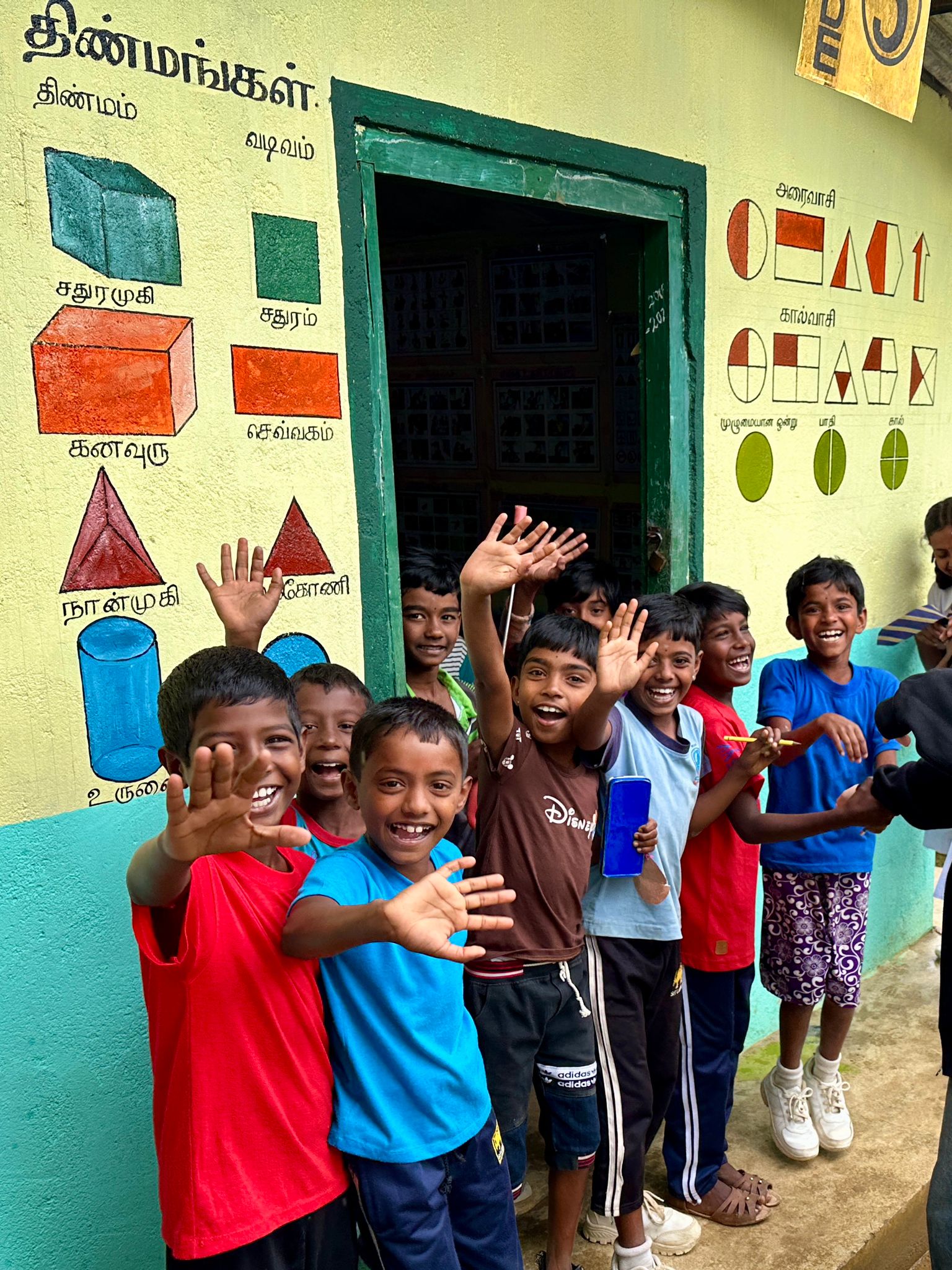
What attracted me most was not only the destination but the content of the workcamp. I knew this trip would not stay in the city. We would live on a tea mountain and step right into the country’s most iconic natural landscape. For me, seeing up close the tea-covered mountains that had only existed in my imagination was already appealing. More importantly, the workcamp was not simply sightseeing. We would visit schools in nearby mountain areas to teach, interact with the village schoolchildren, and join in games, lessons, performances, and other cultural exchange activities. This combination of natural environment, educational service, and cross-cultural encounter felt special and meaningful to me.
But to be honest, my expectations before departure were still somewhat subjective and taken for granted. You know you’re going to a tea mountain and that you’ll be teaching, but many practical details only become clear once you’re there. Especially when a place is so far from Hong Kong’s way of life, and you enter not simply as a tourist, many things you thought you “roughly knew” end up becoming lessons that your body and emotions have to learn to adapt to in person.
It was in this state that I began my Sri Lanka workcamp. At first it looked like a trip to a tea mountain, to schools, and to exchange. But in the end, what I remember most is not the things that are easiest to describe. It is how the whole process gradually taught me to put down my presumptions and to understand again what cultural difference really means, and what genuine exchange is.
Only after six or seven hours of mountain roads did I truly enter the tea mountain
If I had to name the first concrete shock of this workcamp, it would be walking and traveling. Many people hear “living on a tea mountain” and think it sounds poetic, imagining a quiet, comfortable life far from the city. But soon after the journey began, I realized that living on a tea mountain is not just about enjoying the scenery. First, you have to be willing to endure a long and very real mountain road.
After landing, we traveled from the airport city to the area near the tea mountain, and the journey took a full six to seven hours. It was not a smooth, easy ride. It was a long stretch of winding mountain roads in not-so-good condition. For someone like me who gets carsick, those hours were quite hard. It wasn’t merely the length of the ride. We were in an old-style truck with practically no suspension, on bumpy roads, in the heat, with constant turns along the mountain. Before the workcamp had even begun, my body had already been reminded that this would not be an easy trip.
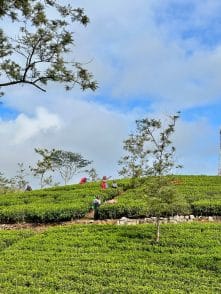
Once we arrived at the tea mountain, the walking didn’t end. Because we lived on the mountain, when we visited other schools in nearby mountain areas, there was often no ready transport to take us there. Basically, we had to walk most of the way. These were not the carefully maintained hiking trails of Hong Kong, not concrete paths and not recreational trails with railings and steps. Often a path was simply a stretch of ground where no tea was planted, so it was used as a way through. In other words, the “road” was merely a space that people could barely pass through, not a properly built path.
This stayed with me, because as you walk, you realize that the parts we find tiring and the road conditions we find unsatisfactory are exactly the route local mountain children take to and from school every day. Walking it once already left me exhausted, but for them it is not an activity or an experience. It is simply life. This contrast made me directly feel that in some places, children really do walk to school like this every day, and walk home the same way.
I think this was also a major gap between expectation and reality in this workcamp. You think you’re going to teach, but you find that the first person to be educated is yourself. A single mountain road is enough to make you rethink what distance means, what daily life means, and what life beyond Hong Kong looks like.
Curry for breakfast, lunch, and dinner, and eating with your hands is harder than it looks
Besides the itinerary and the road conditions, another thing that left a deep impression on me was food. Before departure, I of course knew that Sri Lanka’s food culture would be very different from Hong Kong’s, and that curry is a staple. But only after arriving did I understand what “really curry” means. We ate curry almost three meals a day. Not occasionally, and not curry today and something else tomorrow, but truly curry for breakfast, lunch, and dinner. Of course, curry can be made in different ways and with different accompaniments, but overall the type of food was very concentrated. The staples were often the local flatbreads and similar breads, and the choices were not many.
This highly consistent rhythm of eating was quite a shock for a Hong Kong person. We are used to imagining breakfast, lunch, and dinner as very different things: Chinese food at lunch, Western food the next day, and some other country’s cuisine in the afternoon, as if that were perfectly natural. But there, food isn’t understood that way. Especially since the meals were mainly prepared by local people, we naturally followed their way of living and eating. In that moment you clearly feel that cultural differences in food are not just about taste, but about readjusting your whole concept of “choice.”
But what I remember even more than the curry itself is eating with my hands. There, eating with your hands is not a performance or a special experience. It is simply everyday life. Apart from soup, or things like pudding that genuinely need a spoon, almost everything is eaten by hand. Although the locals didn’t insist that we do the same, since we were there and wanted to do as the locals do, in the end we all tried it.
Honestly, at first it was quite a shock for many of us from Hong Kong. I myself was a little resistant at the beginning. On one hand it felt unfamiliar, and on the other it seemed not quite hygienic, especially when it was hot, there were many activities, and we were walking around the mountain all day, which made us more sensitive. Some people even had trouble eating lunch at first, because this way of eating was so far from what they were used to.
But later, as we all tried it together and felt our way along, we gradually got used to it. The funniest part was that the locals even taught us how to eat with our hands “correctly”: how to curve the hand, how to push the rice into the mouth so that eating goes more smoothly and more elegantly. Only then did I realize that eating with your hands is not just grabbing food casually. There is technique to it. You suddenly understand that something you found unnatural is, in another culture, a mature and skillful everyday ability.
I find this part very interesting. It reminded me that cultural difference is often not about who is more civilized or who is more backward. It’s simply that every place has its own familiar ways of doing things. When you’re willing to set judgment aside and try once, many things you thought you couldn’t accept turn out not to be so difficult after all.
The locals’ warmth shortened the distance faster than language
If you ask which part of this workcamp was the most unforgettable, my answer is still the people, especially the locals, who left a deep impression on me. Their warmth was not the kind of politeness you encounter in many tourist places. It was a direct, unguarded, pure kind of welcome. When we appeared, it sometimes felt as if we had suddenly become the center of attention. Many people gathered around to look, came up to us, and wanted to take photos, shake hands, or even get our autographs. The reaction was surprising and also very endearing. You feel as if you’ve suddenly become someone special, but you also know the warmth isn’t because you are special. It is because they are genuinely curious about visitors and happy to express their welcome so openly.
What’s even more remarkable is that even without a shared language, this warmth did not fade at all. The locals’ English may not be very strong, and of course we don’t speak their language, but this didn’t truly block our connection. Often a smile, a gesture, a glance, or even a very simple interaction was enough to tell that the other person came with goodwill.
This experience mattered to me because it made me believe again that exchange doesn’t have to begin with fluent language. Often, what really shortens the distance is whether you are willing to open yourself first. This was especially clear with the local children. They are innocent, direct, and joyful. Even though their material conditions are not abundant, and some children don’t even have shoes and walk around barefoot, what you see first is not deprivation but the look of people truly enjoying the moment. When they see you, they are simply happy, they smile, and they want to be close to you.
I think this is also what moved me most about the Sri Lanka workcamp. It’s hard to sum it up with just “simple, honest people,” but that may be close enough. It’s not that the place has no real problems. It’s that you can truly feel a kind of unvarnished sincerity in the way people relate to one another. And that sincerity made the exchange in the workcamp richer and more three-dimensional. You aren’t just running activities or completing teaching sessions. You are meeting real people. The interactions may not be complicated, but long afterward you still remember them: the smiles, the crowds that gathered around, the moments when you were suddenly pulled into a photo. Those are in fact the warmest part of the whole journey.
As a team leader, my biggest lesson was letting go of expectations
If I had to say what this Sri Lanka workcamp gave me most, it may not be any single event, but an adjustment in mindset. This is especially because my role in this trip was a bit special. I didn’t go simply as a participant but in a role closer to a leader, guiding the group.
When you’re in this position, you naturally have many more layers to consider than an ordinary participant. You’re not only attending to your own feelings but also to the team members, the local full-time staff, local teachers, students, and even the pace and goals of the whole program. Every party has expectations for this journey, and all of them are reasonable. Some hope the exchange goes smoothly, some hope the activities are meaningful, some hope everyone is happy, and some hope the arrangements run without a hitch. You naturally want to satisfy every side as much as you can.
But once I was on site, I came to understand more and more that sometimes the most important thing is not to carry every expectation on your own shoulders, but to learn to let go at the right moments. When you presume too much, or want everything to turn out exactly as you ideally imagine, you become more prone to disappointment and more likely to miss the beauty that is already happening in front of you.
One of the biggest reminders from this trip was to keep an open mind. Don’t be too quick to define how something should be, and don’t too early imagine that everyone will experience the journey in the same way. Some things bring surprises precisely because you haven’t boxed them in. Whether it’s cultural differences, lifestyle habits, communication styles, or the rhythm of the activities themselves, many things won’t unfold exactly as you originally imagined. But when you’re willing to let them develop naturally, they often become more genuine and more moving.
I later came to feel that this lesson applies not only to workcamps but to everyday life as well. We often make ourselves tense with too many expectations, or judge too early whether something is a success. But this trip to Sri Lanka made me clearly feel that sometimes you really can open your heart first, let things happen, and only then feel them. A journey like that goes deeper.
So if I had to sum up my biggest takeaway in one sentence, I’d say: it’s not that I learned to control everything better, but that I learned to keep trusting that exchange will gradually unfold on its own, even when I don’t fully have things under control.
For the next participant: not a guide, but a mindset
If I were to give advice to anyone who wants to join the Sri Lanka workcamp, what matters most is not a packing list but a mindset.
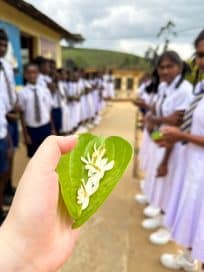
The first key is to keep an open mind. When you get there, many things are very different from Hong Kong. You have to accept that the mountain roads are long, the journeys are far, life on the tea mountain is simple, the food is concentrated, and language may not always be shared. Also, immersing yourself in the culture doesn’t stop at enjoying the scenery. You will probably really try eating with your hands, experience how they bless people, and even let them place a dot of red on your forehead as part of a blessing. These may be unfamiliar to people from Hong Kong, but precisely because they are unfamiliar, they are worth putting your guard down for and experiencing in person.
Second, don’t be too afraid of language barriers. The locals’ English may not be very good, and of course we don’t speak their language, but that doesn’t mean the exchange will fail. On the contrary, the locals are very friendly and willing to approach you first. Often, smiles and goodwill shorten the distance before language does. So there’s really no need to shrink back just because you feel your speaking isn’t fluent enough. Many of the best interactions in the workcamp came not from whoever spoke best, but from everyone being willing to take the first step.
Third, truly take in the nature there. For me, this was also a unique part of Sri Lanka. In Hong Kong, even if you hike, it is usually only for a short while, or occasionally you go camping. But here, you actually live on the mountain for four or five days, fall asleep to the sound of insects at night, and wake up to the sunrise in the morning, with your whole rhythm of life surrounded by nature. That stillness and that pace, so different from Hong Kong’s, is not something many trips can give you. It may not be thrilling, but it is relaxing and easily lets you slowly settle.
I think what is most worth remembering about this Sri Lanka workcamp is not how spectacular it was, but how, bit by bit, it gradually opened up the standards you were used to. When you stop insisting that everything be convenient, smooth, and as expected, you discover that the place itself already has plenty to offer. You’ll see tea mountains, village schools, children, blessings, curry, mountain roads, and smiles, and you’ll also see that you can find a new rhythm, step by step, in such an unfamiliar environment.
And I think this is the most precious thing about international workcamps. They don’t help you escape life. They let you step into another way of living, and when you return, you know better how you can look at the world.
Bridget
Want to make a difference while exploring the world?
Interested in the details of our projects (dates, fees, application process)? Visit the links below!