

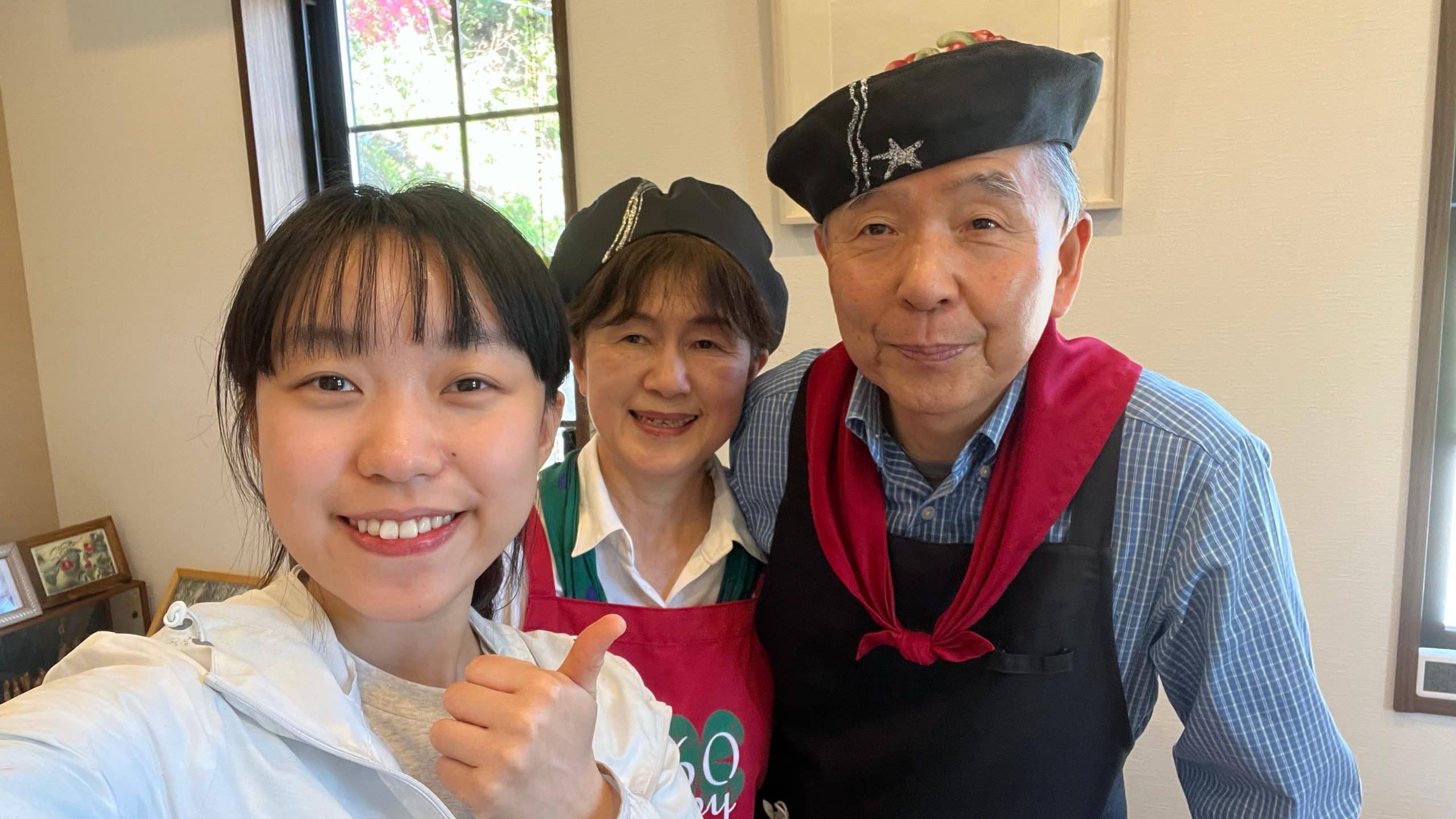
It began with a solo trip, and a wish to get closer to a place
I still remember how I felt after my first solo trip: setting out alone, I discovered that the world could be so big and so wonderful. That trip thrilled me, but it also left me with a deeper thought. If I went away again, I didn’t want to be just a tourist passing through in a hurry. I wanted more contact with local people. I wanted to know that a place’s culture doesn’t live only in its attractions and restaurants, but is hidden in the rhythm of daily life, the way people work, and how they relate to one another.
So I started searching online. Not for “where is fun to go,” but for “is there a way of traveling that goes deeper and stays closer to the ground.” That was how I found a one-week workcamp in Tokushima, Japan. What attracted me most was not how nicely it was packaged, but that its timing and distance were just right. Japan is close, and one week is not long. For someone signing up and setting off on their own for the first time, it was both a challenge and still manageable. More importantly, my instinct told me that to really understand a place, rather than standing outside and looking, it’s better to step in, do something useful, and live for a while with the people there.
I’ll also honestly admit that my expectations when I signed up were quite hazy. Because the program description included the word “experience,” I thought the work might be something like farming or working in the fields, close to nature and fairly leisurely. Looking back, this is an image many first-time participants have: that a “workcamp” is a light blend of travel and volunteering, tiring but not too tiring, labor with plenty of relaxation left over. But after I arrived in Tokushima, this image was gently but firmly overturned by reality.
I thought it would be a farming experience, but it was tree planting and harvesting sudachi
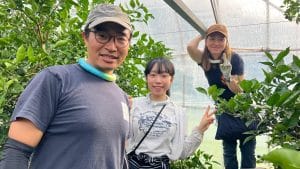
Only after arriving did I learn that the main work was not working in the fields, but helping to plant trees and pick a sour citrus called sudachi. Its taste is tart, a little like other citrus fruits, but with its own fresh fragrance. Frankly, it wasn’t quite the farm work I had imagined, but I wasn’t disappointed. I found it refreshing, because it reminded me that a workcamp is never about “doing what you imagined you’d do.” It’s about doing what the community needs at this moment.
This was also the first time I clearly understood what managing expectations means. You can prepare your luggage, your mindset, and basic information, but you cannot control everything as precisely as an itinerary. The region’s seasons, weather, and the rhythm of its industries are the real timetable of the trip. When the sudachi harvest season arrives, everyone has to pitch in. The harvest doesn’t happen because we came. We simply chose to step in while it was happening.
And precisely because of this timing, I came to feel more deeply that a workcamp is not a staged performance. It is taking part in a stretch of real life.
The biggest challenge: waking at 4 a.m., leaving at 4:30, and sweating more than expected
If I had to sum up the difficulty of this workcamp in one sentence, I’d say the hardest part was not any single task but the combination of the schedule and physical stamina. To avoid the midday heat, we woke at 4 a.m. every day and left by 4:30 to travel to the work site. You read that right: four in the morning. For people used to life in Hong Kong, that hour is usually deep in sleep, and the very idea of being awake hasn’t even arrived. But during my days in Tokushima, four o’clock was the start of the day.
The reason for starting so early is perfectly sensible. If we waited until the sun was high and the temperature rising, outdoor work would be harder and could even affect safety and efficiency. So we chose to do the heaviest work in the early morning. Even in March and April, I still sweated a great deal, and my body kept reminding me that this was not a “light experience.” It was real labor.
What I struggled with most was sleepiness. Forcing yourself up before dawn, when your body isn’t fully awake, getting ready to go out, and bringing your mind to the work is a real test. You find that willpower isn’t used for big things but for the most basic daily actions: getting up, brushing your teeth, getting on the bus, starting work. As you switch back and forth between the chill of early morning and the sweat that follows, you see your limits very directly, and you also see that you can endure and adapt more than you imagined.
If you ask me, “Was it worth it?” I’d say the hardship was real, but precisely because of it, I learned that I am not someone who can only enjoy comfort. I can walk into an uncomfortable environment and still finish what needs to be done that day. This grounded confidence stayed with me after I returned to Hong Kong.
What I remember is not the scenery but the people: Israel, Taiwan, and two local staff members
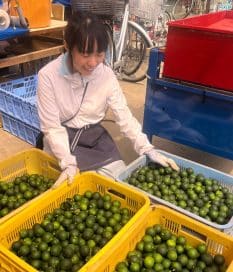
When my body was at its most tired, what supported me most was often not a sense of purpose but having people alongside me. At the workcamp I met many work campers from around the world, including friends from Israel and Taiwan, as well as two local staff members. It was my first chance to work with “people from all over the world.” Not chatting online or swapping social media accounts, but being in the same place, in the same early-morning hours, doing the same task together.
This kind of exchange is real. You hear English in different accents. You see some people work fast and some work slowly, some are quiet and some love to joke. You also suddenly realize that everyone isn’t simply “there to help.” Each person has their own reasons, their own story, their own rhythm of life. Some stay only a week, while others have been there for months, even a year. Length of stay differs, ways of contributing differ, and so do ideas about what counts as doing a good job.
And the amazing thing is that despite such differences, everyone could still get things done together. Without noticing, you learn to express yourself more clearly, to listen more willingly, and to loosen your need for control in collaboration. In Hong Kong, this ability is often hidden beneath exams and work KPIs, but at the workcamp it became a survival skill used every day.
Culture shock: Hong Kong’s “keep going until it’s done” meets a work-life balance rhythm
For a while I considered myself a very typical Hong Kong person: hardworking, eager to finish quickly, feeling that doing more brings peace of mind. So when I saw some teammates who valued work-life balance, working for a while, resting, then working again, my first reaction was a bit of culture shock. In Hong Kong, we often equate “never stopping” with “being serious” and “resting” with “not trying hard enough.” But there I began to see another possibility: rest isn’t laziness, but a way to keep going longer and more steadily.
At first this difference did cause some communication friction. When you think, “Why aren’t they working faster?”, the other person might be thinking, “Why don’t you take a break?” But I’m glad we ended up getting along well. Even though our work habits differed, we shared a common goal: to contribute something to the community and to learn more about local life. When a shared goal is clear enough, it’s easier to shift the focus from “whether you’re doing it right” back to “how can we do this better together.”
To this day, I’m still in touch with two of my teammates. This friendship is precious to me, because it didn’t begin because we clicked easily, but continued because we had struggled through hard work together.
Meeting cherished lives near my lodging: three or four cats, and a dog
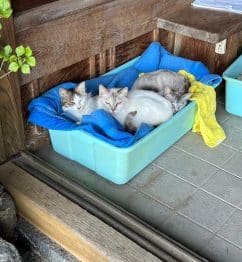
Besides people, animals also became a gentle part of my memories. There were quite a few animals near where I stayed, and the way the host family treated them left an impression. They cherished them as they would friends. The host kept many cats, I’d guess at least three or four. The feeling that the animals were not accessories but part of life was interesting and healing to me.
They also kept a goat. One day we planned to take it for a walk, but it happened to be agitated that day, so in the end we didn’t go. It was an ordinary scene, but I remember it clearly, because it showed me a way of caring that doesn’t force anything. They didn’t insist on a walk just because it had been planned. They first observed the animal’s state and understood its needs. This kind of attentiveness echoes something I learned at the workcamp: whether with animals, people, or yourself, adapting is not about forcing yourself to push through, but about understanding first and then adjusting.
Cultural exchange can be very everyday: a bowl of tomato and egg soup, snacks, and keychains
I had always assumed cultural exchange had to be grand, with events, performances, and lots of props. But in Tokushima, I found that cultural exchange often happens in the most ordinary places, such as dinner.
One evening I was in charge of cooking, and I made tomato and egg soup. My teammates said it was their first time tasting it and found it special. In that moment I was suddenly moved, because I wasn’t “introducing Hong Kong.” I was bringing my own culture to everyone’s table in a very everyday way. I also brought snacks and keychains from Hong Kong as small gifts for fellow campers. They weren’t expensive, but they were thoughtful, because they meant “I’m willing to share my home with you.”
I was also inspired by other campers. One very experienced participant from Taiwan led everyone in the evenings in cutting red paper for handmade decorations similar to Lunar New Year couplets, and brought stickers in traditional Chinese characters. Her creativity in “bringing home with her” impressed me. It made me think that if I join again, I’d like to prepare more items and stories that represent Hong Kong, so more people can form a fuller picture of it through me.
Free time after work: finishing at two or three, cycling to find small shops and scenery
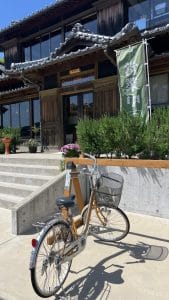
The work lasted about eight hours, and we usually had free time from two or three in the afternoon. This time was precious to me, like a breathing space after a hard day. It wasn’t luxurious relaxation, but the ease you earn through labor. Sometimes I went out with new friends I’d met at camp, and sometimes I cycled around on my own, looking for different restaurants and nearby scenery, slowly turning “Tokushima” from a name on a map into routes my body remembered.
There’s also a very practical side of managing expectations here: to explore nearby shops you usually have to cycle, and a one-way trip can take over an hour. This isn’t the urban scale of “a convenience store right downstairs,” but a distance closer to rural life. So one very direct piece of advice for future participants is to learn to ride a bicycle. With a bike, your free time expands considerably. Without one, you may be confined to a fairly narrow circle of life, missing many chances to head out and see things for yourself.
Seemingly small skills like these greatly affect your quality of life at a workcamp. A workcamp won’t arrange everything comfortably for you, but it gives you room. Whether you can turn that room into an experience depends on how much capability and initiative you bring.
Another challenge: working out shared chores with people of different backgrounds and lengths of stay
Besides the early mornings and physical labor, another very real challenge was communicating and coordinating with campers of different backgrounds. Everyone stays for a different length of time: some live there for months or even a year, while others, like me, stay only a week. Rhythms and habits differ, and the unspoken understanding of “who should do what” doesn’t appear automatically.
So matters like laundry, cooking, and dividing daily chores required everyone to sit down, talk, and gradually work things out. This kind of adjustment is genuinely demanding, because enthusiasm alone can’t solve it. It takes respect, clarity, and a bit of patience to accommodate one another. You discover that real cross-cultural exchange is not everyone shouting slogans together, but whether you’re willing, even in the most everyday and trivial matters, to treat the other person as someone who needs to be understood. That ability is one of the most practical and lasting gains the workcamp gave me.
The biggest inspiration: hearing the farm owner’s life story, I began to believe “life holds many possibilities”
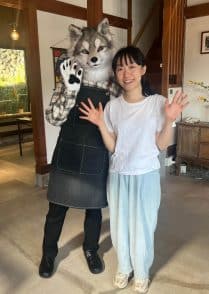
If I had to name the biggest change this workcamp brought me, I’d say it was the broadening of my worldview. I clearly remember the jolt of “so it can be done this way” after hearing the story of the farm owner, Masa. He once had a stable job in Tokyo, but because he didn’t want the sudachi of his hometown to gradually die out and disappear, he chose to return home and run a farm. He also shared how many people have left his village and how few young people remain, and said he hopes to bring some vitality back to the place.
In Hong Kong, we are used to treating “stability” as the most reasonable answer and “leaving” as moving forward. But in Tokushima, I heard of another choice: someone willing to come back in order to protect a place’s fruit, a piece of culture, a way of life. In that moment I suddenly understood that the world becomes bigger not because of how many countries you’ve visited, but because you begin to see that life has more than one path, and “meaningful” comes in many versions.
This understanding is hard to finish in one sentence, but it stays in your heart and slowly influences how you make choices later. You begin to ask yourself: What do I truly cherish? What am I willing to give myself to? In what kind of rhythm do I want to place my life?
If I went again: lower my expectations and open my heart wider
If I had another chance to join a workcamp, I would set out with a more open mind and deliberately lower my expectations a little. “Lowering expectations” here doesn’t mean telling myself not to seek experiences, but reminding myself not to imagine a workcamp as something that “should be” a certain way. When you hold too many “shoulds,” you easily become disappointed when things don’t match your imagination. When you open your heart, you accept new things faster and more easily find value in hardship.
I would also prepare more things that represent Hong Kong, just as the Taiwanese camper cut Lunar New Year decorations from red paper and shared her home with traditional-character stickers. Next time, I hope to bring not just snacks and keychains but small items that tell Hong Kong’s story, or a warmer way of sharing. One of the most appealing things about a workcamp is that you don’t only see other people’s cultures, you are also pushed to articulate your own more clearly.
I’m grateful that I made this decision. It wasn’t easy, and was far harder than I imagined. But precisely because it wasn’t easy, I’m all the more sure that it was a real journey of growth. When you’re willing to get up at 4 a.m., work through the sweat, and negotiate with others over the trivia of daily life, what you take away is more than a photograph. It is a larger worldview and a steadier inner strength.
Mercy
Want to make a difference while exploring the world?
Interested in the details of our projects (dates, fees, application process)? Visit the links below!